What a Knowledge Graph Found in 3,829 Belarusian Charge Sheets That No Single Case File Could Show

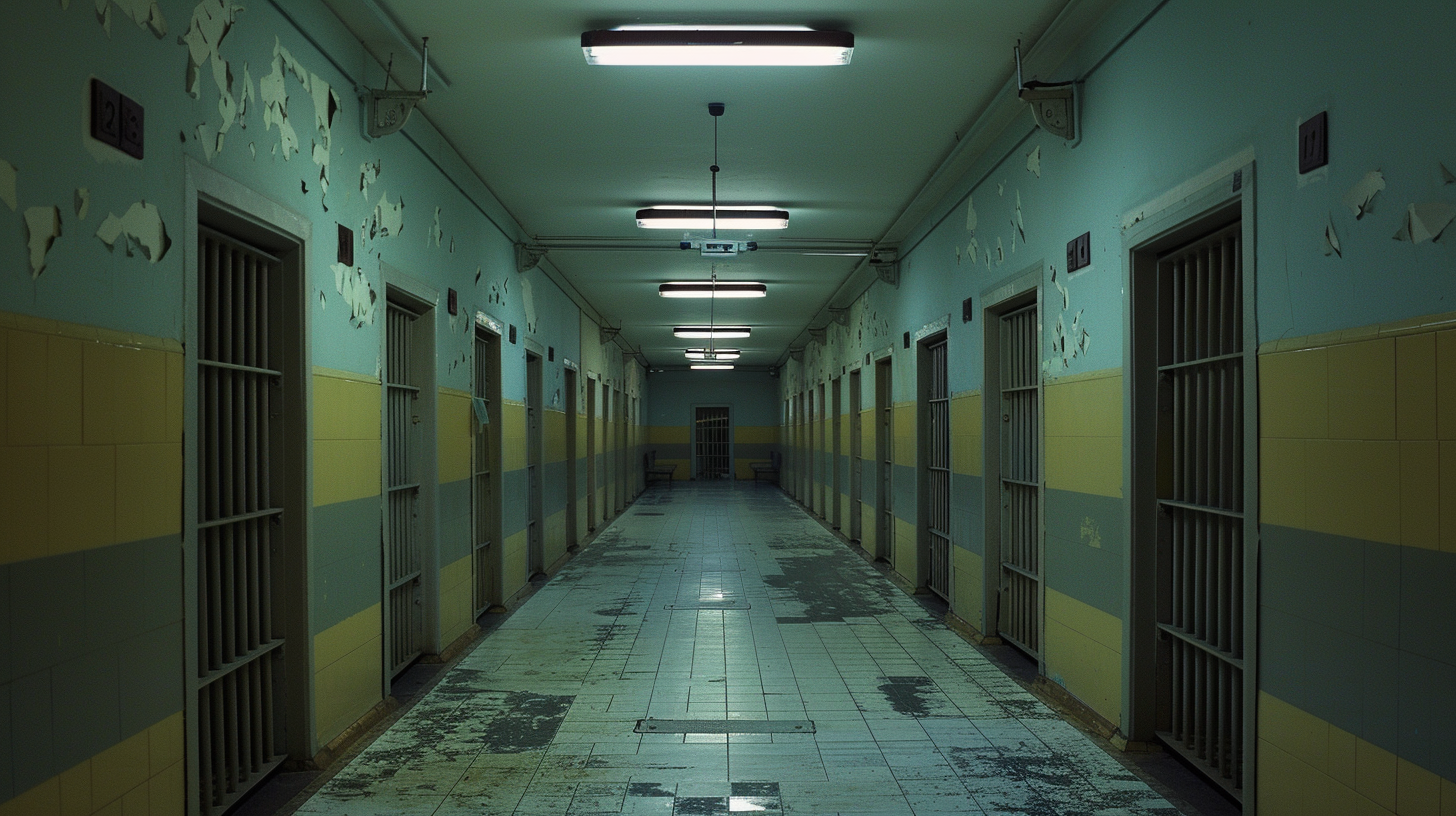
The grinder does not distinguish.
Cuba sorts its prisoners into two categories that never overlap. Russia ratchets through discrete steps, adding new tools without discarding old ones. Belarus does something different: it collapses. The charging structure that existed in the first months after the August 2020 election protests has been grinding itself flat ever since. The communities that Louvain detects in the 2020 data dissolve by 2024. The modularity drops from 0.26 to 0.11. The state is not building a differentiated repressive architecture. It is running every case through the same small set of articles, applied without the structural variation that would indicate prosecutorial discretion. That absence of discretion is not a footnote. Under the jurisprudence of the UN Working Group on Arbitrary Detention, a charging pattern that applies the same articles uniformly to all forms of dissent, without individualized assessment of the conduct alleged, meets the definition of arbitrary detention under Category III. The homogenization is the violation.
We read 8,689 prosecution records from Viasna's political prisoner database, covering every documented case with charge information since 2020. The core article, Art. 342 ("grossly violating public order"), does not define the conduct it criminalizes. The UN Human Rights Committee has found Belarus in violation of ICCPR Article 21 in multiple individual communications. What this analysis adds is the systemic dimension: 3,788 people charged under the same undefined article, 86% as a standalone single charge, with no measurable variation in how the article is applied across protest, speech, association, or any other form of dissent. That uniformity is not prosecutorial efficiency. It is the structural signature of a system that has replaced individualized assessment with a template. The data is the proof.
prosecutions
articles used
standalone
(from 0.26 in 2020)
Three regimes in 2020. One undifferentiated mass by 2024.
Louvain community detection finds four communities in the full dataset, but the temporal analysis reveals these are a snapshot of a process of collapse. In 2020, the charging structure had nine detectable communities and a modularity of 0.26. By 2024, modularity had fallen to 0.11. The communities are dissolving into each other. This is not a ratchet (Russia) or a stable partition (Cuba). This is homogenization.
The legal significance is specific. ICCPR Article 9(1) prohibits arbitrary detention. The WGAD's Category III covers deprivation of liberty where "the total or partial non-observance of the international norms relating to the right to a fair trial" is of such gravity as to give the detention an arbitrary character. A system that charges 86% of political defendants under a single undefined article, without individualized assessment, without variation by conduct, and with a conviction rate that leaves no room for judicial independence, satisfies that standard on its face. The HRC's General Comment 34 (para. 38) separately establishes that laws criminalizing insult to the head of state are incompatible with Article 19. Belarus has three such articles (367, 368, 369), applied to 3,300 people in this dataset.
Art. 342 (grossly violating public order) is the engine of Belarusian repression. Applied to 3,788 people, standalone in 85.8% of cases. This is the highest standalone rate of any primary charge across all four countries in the comparative framework. It is a single-article conviction factory.
Arts. 368 (insult president), 369 (insult official), and 367 (slander president) form a tight cluster. Unlike Art. 342, these charges stack heavily: 368 is standalone only 34.5% of the time. The typical file charges insult-to-president plus insult-to-official plus incitement, compounding the sentence.
Arts. 361-1 (extremist formation), 361-4 (promoting extremism), and 361-2 (financing extremism) are structurally identical to Russia's 282.1/282.3/284.1 cluster. They target members of organizations designated "extremist" by executive decision. In Belarus, these designations cover independent media (Tut.by), human rights groups (Viasna itself), opposition movements, and Telegram channels. By 2025, Art. 361-4 overtook Art. 342 as the most-charged article, signaling a shift from protest suppression to organizational persecution.
Cuba has two menus. Russia has a ratchet. Belarus has a grinder. The modularity fell from 0.26 to 0.11 in four years. The state stopped sorting its prisoners because it stopped needing to tell them apart.
Every year since 2020 is a structural break.
In Russia, only two of six candidate break years were significant. In Belarus, every single year passes the permutation test (all p=0.005). The charging architecture is not settling into a stable configuration. It is continuously simplifying. This is the signature of a system that has not found its equilibrium because it is still tightening.
The volume peaked in 2022 (893 prosecutions) but the structural simplification continued: single-charge prosecutions rose from 66% (2020) to 75% (2022-2025), and the number of detectable communities fell from 9 to 4. The system is converging on a minimal-article, maximal-throughput model. Under international law, this convergence has a name: it is a pattern of practice. The International Law Commission's Articles on State Responsibility (Art. 15) define a composite internationally wrongful act as one "occurring through a series of actions or omissions defined in aggregate as wrongful." The monotonically declining modularity is the aggregate.
In 2025, the primary weapon changed.
For four years (2020-2024), Art. 342 (public disorder) was the most-charged article every single year. In 2025, Art. 361-4 (promoting extremism) overtook it for the first time: 107 cases versus 42. This is not a minor fluctuation. It is a structural pivot from protest suppression to organizational persecution. Belarus is following Russia's trajectory with a two-year lag: Russia's organizational regime (Art. 282.2) was already the largest cluster before the invasion; Belarus is arriving there now.
The other signal in the 2024-2025 data: the proportion of women prosecuted peaked at 33.7% in 2024, the highest of any year and any country in the comparative dataset. This is consistent with the shift to organizational charges, which target association (subscribing, donating, sharing) rather than physical presence at protests.
The Belarusian state designated the human rights organization that collected this data as extremist. Viasna's own employees have been prosecuted under Art. 361-1 for the act of documenting political persecution. The dataset is documenting the system that is trying to destroy the dataset.
If the argument holds, three things become possible.
The collapsing modularity shows that the state is not exercising prosecutorial discretion. It is applying a small menu of charges uniformly across all forms of dissent. The OHCHR mandate on Belarus (resolution 49/26, renewed 2024) can cite the structural finding as evidence that the repression is systematic rather than case-by-case. Under the WGAD's revised methods of work, a "pattern of practice" finding triggers the enhanced follow-up procedure and can be referred to the Human Rights Council as a situation of widespread arbitrary detention.
Cluster 1 (protest) violates Article 21 (assembly). Cluster 2 (insult) violates Article 19 (expression), with the HRC's General Comment 34 explicitly rejecting criminal insult-to-head-of-state laws. Cluster 3 (extremist formations) violates Article 22 (association). The SKOS vocabulary maps each Criminal Code article to the ICCPR provisions it violates, making every record ICCPR-queryable.
Cuba (two static regimes), Russia (discrete ratchet), Belarus (continuous grinder). Each is structurally distinct, found by the same unsupervised algorithm on the same type of data. The cross-system finding is stronger than any single-country analysis: the methodology is not aimed at one state. It reads the pattern the charging data contains, whatever that pattern turns out to be.
Method note · What we actually did
We took the public database of 8,689 political prisoner prosecutions published by Viasna Human Rights Centre and encoded every record in a formal ontology with a SKOS charge vocabulary mapping 98 Belarusian Criminal Code articles to ICCPR provisions. Louvain community detection was applied at the default resolution parameter (1.0). Structural break detection uses a permutation test with year-label shuffling. The pipeline is fully reproducible: six scripts from CSV to this report. The complete codebase is open on GitHub.
This analysis is the third in a comparative series. The Cuba analysis (Prisoners Defenders, 1,172 prisoners) is published here. The Russia analysis (OVD-Info, 7,111 prosecutions) is published here.
Viasna documented 8,689 prosecutions. The Belarusian state designated Viasna as extremist. Viasna's founder, Ales Bialiatski, received the Nobel Peace Prize in prison and was charged under Art. 342. The dataset contains the charge sheet of the organization that built the dataset. That recursion is the point. The grinder does not distinguish between the person it prosecutes and the person who writes it down. It does not distinguish because the charging data shows it has stopped distinguishing between anything. That is not a feature of prosecutorial discretion. It is the absence of it. Under international human rights law, that absence has a name: arbitrary detention, practiced systematically, documented in 8,689 charge sheets the state never expected anyone to read together. The ontology does not open the cell. It writes down what the state has done, in a form the state cannot revise, in a language other institutions can read. That is not a remedy. It is a precondition for one.